
Adenoids Treatment in Hyderabad – ENT Specialist Care
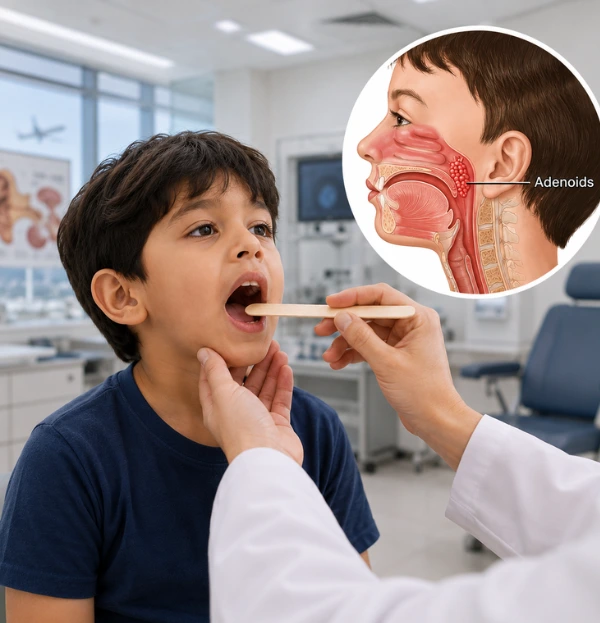
Adenoids are small glands located at the back of the nose, above the roof of the mouth. They play a role in fighting infections during childhood but can become enlarged or infected, leading to breathing difficulties, nasal blockage, or recurrent ear and throat problems. Enlarged adenoids are more common in children but can occasionally affect adults. At ENT Clinic, Nanal Nagar, Hyderabad, Dr. Abdul Aziz, ENT Specialist, provides safe and effective diagnosis and treatment for adenoid problems using modern ENT techniques.
Causes of Enlarged Adenoids
Adenoid enlargement may occur due to:
- Frequent infections such as colds or flu
- Allergic reactions causing swelling
- Chronic sinus or nasal problems
- Genetic predisposition in some children
- Environmental irritants like smoke or pollution
Symptoms of Adenoid Problems
Children or adults with enlarged adenoids may experience:
- Blocked or stuffy nose
- Mouth breathing, especially at night
- Snoring or disturbed sleep
- Recurrent ear infections or hearing issues
- Nasal speech (voice sounds blocked)
- Frequent sore throat or sinus infections
-
Precautions
- Treat infections promptly.
- Avoid exposure to dust, smoke, and allergens.
- Encourage healthy nasal hygiene with saline sprays.
- Seek ENT consultation if symptoms persist or worsen.
Treatment Options at ENT Clinic
At ENT Clinic, Dr. Abdul Aziz uses evidence‑based methods to manage adenoid problems:
- Nasal examination and endoscopy to assess adenoid size.
- Medication such as antibiotics or nasal sprays for infections.
- Monitoring in mild cases to see if adenoids shrink naturally with age.
- Adenoidectomy (surgical removal) for severe or recurrent cases.
- Follow‑up care to ensure healthy breathing and prevent recurrence.
FAQ's
Q1. What are adenoids?
Adenoids are small glands located at the back of the nose that help fight infections in childhood.
Q2. Can adenoids cause breathing problems?
Yes, enlarged adenoids can block airflow, leading to mouth breathing and snoring.
Q3. Do adenoids shrink with age?
Yes, adenoids usually shrink naturally during adolescence, but some children may require treatment earlier.
Q4. How are adenoid problems diagnosed?
An ENT specialist examines the nasal passages and may use endoscopy or imaging tests.
Q5. What treatments are available for enlarged adenoids?
Options include medication, monitoring, and in severe cases, surgical removal (adenoidectomy).