
Snoring & Sleep Apnea Treatment in Hyderabad – ENT Specialist Care
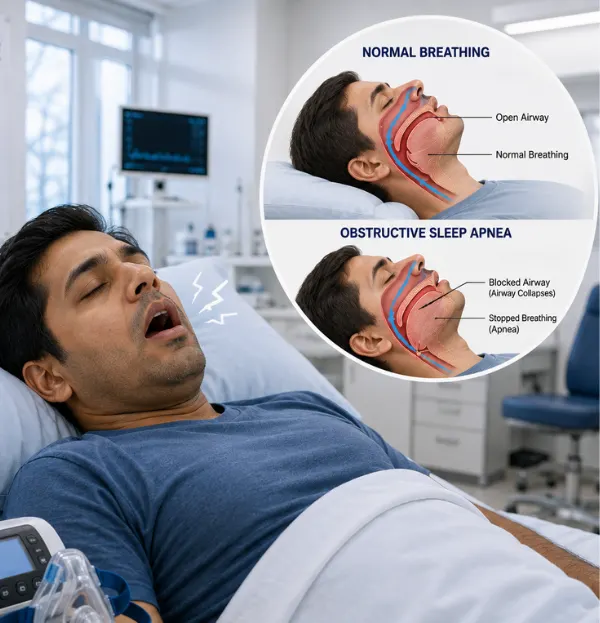
Snoring is a common condition where airflow through the throat is partially blocked during sleep, producing noisy breathing. In some cases, snoring may be a sign of obstructive sleep apnea (OSA), a serious disorder where breathing repeatedly stops and starts during sleep. OSA can affect sleep quality, daytime energy, and overall health. At ENT Clinic, Nanal Nagar, Hyderabad, Dr. Abdul Aziz, ENT Specialist, provides safe and effective diagnosis and treatment for snoring and sleep apnea using modern ENT techniques.
Causes of Snoring & Sleep Apnea
Ear discharge can result from several conditions, including:
- Nasal blockage from allergies, sinusitis, or polyps
- Enlarged tonsils or adenoids
- Obesity leading to narrowed airway
- Structural abnormalities in the nose or throat
- Alcohol or sedative use relaxing throat muscles
- Family history of sleep apnea
Symptoms of Snoring & Sleep Apnea
Patients may experience:
- Loud, chronic snoring
- Pauses in breathing during sleep (noticed by bed partner)
- Restless sleep or frequent awakenings
- Daytime fatigue or sleepiness
- Morning headaches
- Difficulty concentrating
- Irritability or mood changes
-
Precautions
- To reduce snoring and sleep apnea risks:
- Maintain a healthy weight.
- Avoid alcohol and sedatives before bedtime.
- Sleep on your side instead of your back.
- Treat nasal allergies or sinus problems promptly.
- Seek ENT consultation if snoring is loud or associated with breathing pauses.
Treatment Options at ENT Clinic
At ENT Clinic, Dr. Abdul Aziz uses evidence‑based methods to manage snoring and sleep apnea:
- Detailed ENT and sleep evaluation with diagnostic tools.
- Lifestyle modifications including weight management and sleep hygiene.
- CPAP therapy (Continuous Positive Airway Pressure) for moderate to severe OSA.
- Surgical options such as tonsillectomy, adenoidectomy, or nasal correction for structural issues.
- Follow‑up care to monitor sleep quality and prevent recurrence.
FAQ's
Q1. What causes snoring?
It is usually caused by blocked airflow due to nasal or throat issues.
Q2. Is snoring always linked to sleep apnea?
Not always. Occasional snoring may be harmless, but persistent loud snoring can indicate OSA.
Q3. Can sleep apnea be dangerous?
Yes, untreated OSA increases the risk of heart disease, stroke, and daytime accidents.
Q4. How is sleep apnea diagnosed?
Through ENT examination and sleep studies that monitor breathing patterns.
Q5. What treatments are available for snoring and OSA?
Options include lifestyle changes, CPAP therapy, and surgery for structural problems.